Key takeaways
Most roof problems give you time. A slipped tile, a minor flashing gap, a patch of moss that needs clearing: these are maintenance issues that can be scheduled and dealt with properly.
Some roof problems do not give you time. They are getting worse by the hour, creating secondary damage that multiplies the eventual repair cost, and in serious cases putting the building and the people in it at risk.
This guide covers the eight signs that put a roof problem into the second category: the ones that need an emergency roofer called the same day, not a quote requested and considered over the weekend.
Each of the following involves either active structural risk, secondary damage already in progress, or a condition that will deteriorate significantly with the next rainfall. If any of them applies to your property, same-day response is the right call.
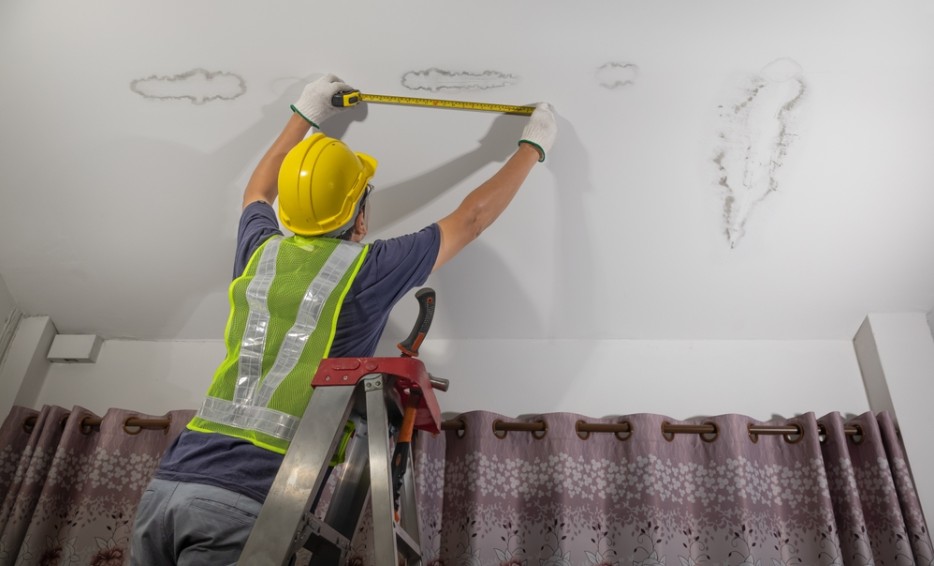
A sagging or bulging ceiling means water has been pooling above the plasterboard for long enough to saturate it. Plasterboard absorbs water quickly and loses structural integrity fast. A ceiling in this condition can come down without warning, and when it does, it brings the water stored above it with it.
This is not a situation to monitor. If the ceiling is visibly deformed, it needs to be drained immediately by carefully puncturing the lowest point to release the water in a controlled flow, and a roofer needs to be called the same day. The longer the weight of water sits above a compromised ceiling, the more likely a collapse becomes.
If you’ve discovered a leak and need to know what to do next, see our guide on what to do if your roof is leaking for the immediate actions to take.
Water running through a ceiling rose, dripping from a light fitting, or pooling near a switch or socket is an immediate dual emergency: roof and electrical.
Water that has reached an electrical fitting has already travelled a significant distance through the building structure. It has likely contacted cables, junction boxes, or other components that are not visible from below. Turn off the circuit breaker for the affected area at the consumer unit immediately. Do not attempt to use switches or fittings in the affected zone until a qualified electrician has inspected the installation.
For landlords, this triggers an immediate legal obligation. A water-damaged electrical installation in a rented property must be inspected and recertified before the circuits go back into use. Failure to act creates both a safety risk and a compliance liability.
If you can see daylight through the roof structure from inside the loft, water can get in through the same gap. Any opening large enough to admit light is large enough to admit wind-driven rain, and the gap is almost certainly larger than it appears from below.
Daylight through a roof deck usually means a tile or slate is missing entirely, a section of felt has split or lifted, or a boarding or decking panel has shifted or rotted through. Any of these conditions will worsen with the next rainfall. If the gap is above a habitable room, there is no meaningful buffer between the incoming water and the ceiling below.
Roof timbers that are wet, stained dark with moisture, or beginning to bow are carrying water they were not designed to hold. Timber absorbs moisture progressively. A rafter or purlin that is wet today will be softened next week and structurally compromised next month.
Wet timbers also create the conditions for wet rot and dry rot. Dry rot in particular spreads through masonry as well as timber and can affect structural elements well beyond the original area of ingress. It is significantly more expensive to treat than to prevent. If timbers in the loft are visibly wet after rainfall, that is an emergency, not a maintenance note.
High winds lift and dislodge tiles, shift flashing, crack ridge tiles, and deposit debris that punctures roof membranes. After any significant storm, a visual inspection from the ground is worthwhile. Signs that require immediate action include:
A damaged roof after a storm will leak with the next rainfall. Waiting a few days for a non-emergency appointment almost guarantees interior water damage that would not have occurred if the repair had been made immediately.
Most home insurance policies require you to take reasonable steps to prevent further damage after a storm event; leaving a visibly damaged roof unaddressed can affect a claim.
A persistent smell of damp or mould in upper rooms or in the loft, particularly if it appeared recently or has worsened after recent rainfall, suggests moisture has been entering the building and sitting in insulation or on structural surfaces.
Mould growth begins within 24 to 48 hours of moisture exposure on organic materials. In insulation, it is not always visible until the insulation is removed. In timber, it can signal the early stages of rot.
A damp smell that cannot be explained by condensation or a plumbing issue is worth investigating as a potential roof ingress problem, not leaving until the next scheduled inspection.
Under Awaab's Law, social landlords are now legally required to investigate damp and mould reports within 10 working days. For private landlords, the direction of UK housing law is clearly toward faster response requirements, and ignoring a mould or damp report is increasingly difficult to defend.
A single, intermittent drip through a ceiling is a roof problem. Water entering from multiple points simultaneously, or coming through heavily during rainfall, suggests either a large area of the roof covering has failed, or the water ingress has been going on long enough to saturate the structural layer above.
Multiple ingress points after a single weather event almost always mean the roof has an existing condition that the weather has exposed rather than caused.
That distinction matters for insurance purposes, but it also indicates that a targeted patch repair is unlikely to be sufficient. A roofer who inspects the full roof surface, not just the visible damage points, is needed.
Flat roofs are designed to drain. A properly maintained flat roof with adequate falls should not hold standing water for more than 24 to 48 hours after rainfall. If water is visibly pooling on a flat roof and not clearing, one of two things has happened: the drainage outlets are blocked, or the falls in the roof surface have failed.
Standing water on a flat roof exerts sustained pressure on the membrane and accelerates deterioration at the most vulnerable points, typically at joints, edges, and around any penetrations. It also adds weight to the structure.
A flat roof holding significant standing water is carrying a load it was not designed for. If this is a recurring pattern rather than an isolated event, the drainage design or the roof surface itself needs professional assessment.
The case for calling an emergency roofer is not just about the roof. It is about what water does to everything else in the building while the roof remains unrepaired.
Plasterboard saturates and collapses. Insulation compresses and loses its thermal value. Timber rots. Mould establishes itself in materials where it cannot be cleaned out, only removed. Electrical components corrode. Decorative finishes on walls and ceilings are destroyed. Each of these is a repair cost that did not exist before the water got in.
In commercial properties, the consequences extend further: stock damage, equipment failure, premises closure, tenant displacement, and compliance issues with building regulations and health and safety requirements. Emergency repair costs are almost always less than the cumulative cost of secondary damage in a commercial setting.
The Royal Institution of Chartered Surveyors (RICS) notes that water ingress is among the most common causes of accelerated building deterioration in UK residential and commercial stock. The pattern is consistent: a small repair left unaddressed becomes a large one, and a large one left unaddressed becomes a structural issue.
An emergency roofer may not be able to attend for several hours. The decisions you make in the meantime determine how much damage occurs before they arrive.
Buckets, towels, plastic sheeting: anything that prevents water from spreading across flooring or reaching adjacent rooms. If a ceiling is bulging, drain it carefully with a screwdriver rather than waiting for it to collapse.
Switch off electricity to any circuits running through or near the affected area. Water inside an electrical installation is not a risk to take.
Access a flat roof only if you can do so safely from ground level. A heavy-duty tarpaulin weighted at the edges can reduce water ingress temporarily while you wait.
This protects your insurance position and gives the roofer a clear record of the condition on arrival.
For residential landlords, a roof emergency means a tenant without a habitable room and a repair bill. Both are serious. In a commercial setting, the consequences of delayed response multiply quickly.
A restaurant or café that cannot trade because water has come through the ceiling does not just lose the repair cost. It loses the day's revenue, potentially more if the damage reaches kitchen equipment or requires a deep clean before the premises can reopen.
A retail unit with a wet floor and damaged stock faces the same calculation. An office where ceiling tiles have come down and electrical circuits are offline cannot operate, regardless of how minor the underlying roof defect turns out to be.
The pattern is consistent across commercial properties: the cost of an emergency roofer attending within two hours is almost always less than the cumulative cost of half a day's closure, staff sent home, stock written off, and a more extensive repair once the secondary damage has spread further.
Response time is also a factor in insurance claims. Most commercial property policies require the policyholder to take reasonable steps to mitigate loss after an incident. Waiting several hours before arranging emergency repairs, or failing to contain internal water spread in the meantime, can affect the outcome of a claim.
For facilities managers and property management companies running multi-site portfolios across London, having an emergency roofing contractor on an agreed response contract removes the delay of sourcing one during an incident.
For context on what repairs cost once that deterioration reaches the point of failure, see our breakdown of roof repair costs in London.
Emergency roof repairs are necessary when the building is actively taking on water in volume, when secondary damage is already underway, or when the structural integrity of the roof or the safety of the building's occupants is at risk. The eight signs above cover each of those conditions.
Calling an emergency roofer costs more than a scheduled appointment. Leaving any of the above unaddressed costs more than that.
What counts as an emergency roof repair?
A roof repair is an emergency when the building is actively taking on water, structural elements are visibly compromised, water is reaching electrical fittings, a ceiling is sagging, or significant storm damage has left the roof covering open to the next rainfall. Any of these conditions will worsen without immediate intervention.
Can I temporarily fix an emergency roof problem myself?
You can limit internal damage by containing water, draining a bulging ceiling, switching off affected electrical circuits, and placing a tarpaulin over an accessible flat roof section. Do not attempt to access a pitched roof. These steps buy time but do not substitute for a professional repair.
How quickly should an emergency roofer respond?
For genuine emergencies involving active water ingress, structural damage, or electrical risk, same-day attendance is the appropriate expectation. Most emergency roofing contractors in London offer a 2 to 4 hour response window for priority call-outs.
Does insurance cover emergency roof repairs?
Most standard buildings insurance policies cover sudden storm damage. Emergency repairs to limit further damage following a storm event are typically covered, subject to policy terms and excess. Damage attributed to wear and tear or lack of maintenance is usually excluded. Always notify your insurer before arranging repairs where possible.
What causes most emergency roof situations?
Storm damage is the most common trigger: high winds dislodge tiles and lift flashing, and heavy rain exploits gaps that were present but not yet causing problems. A roof in poor condition is significantly more vulnerable to storm damage than a well-maintained one. Most emergency call-outs follow weather events that reveal an existing weakness rather than creating new damage from scratch.
How do I find a reliable emergency roofer in London?
Look for a contractor with verifiable reviews, adequate public liability insurance, and a confirmed same-day response window before you agree to anything. Avoid anyone who quotes without inspecting or asks for full payment upfront. For commercial sites, an agreed response contract with a maintenance partner removes the need to search during an incident.
Should I get on the roof to assess the damage myself?
No. Assessing visible damage from ground level is safe and useful. Accessing a pitched roof without professional equipment, training, and ideally a second person present is not. Falls from roofs are among the most serious causes of fatal domestic accidents in the UK. Leave the inspection to a qualified roofer.
Roof problem that cannot wait?
A leak spreads quickly once water is in. Call us and we will get a roofer out to assess it.
Roof repair in London or the South East?
FS Group repairs roofs, gutters and flashing across London, Essex, Kent and Hertfordshire. Call to book an inspection.

.png)
.png)




















.jpeg)


.jpeg)
.png)
.png)
.png)
.png)