Key takeaways
No heating or hot water is one of those problems that feels urgent the moment it happens, and in the middle of winter, it genuinely is. Before you call a plumber, though, there are several checks you can run yourself in under ten minutes.
Some of the most common causes behind a sudden loss of heating or hot water require no tools, no technical knowledge, and no cost to fix.
This guide covers what to check first, how to read what your boiler is telling you, the most likely causes depending on your symptoms, and when the job needs a plumber.
The first thing to check is not a pipe or a valve. It is the boiler itself.
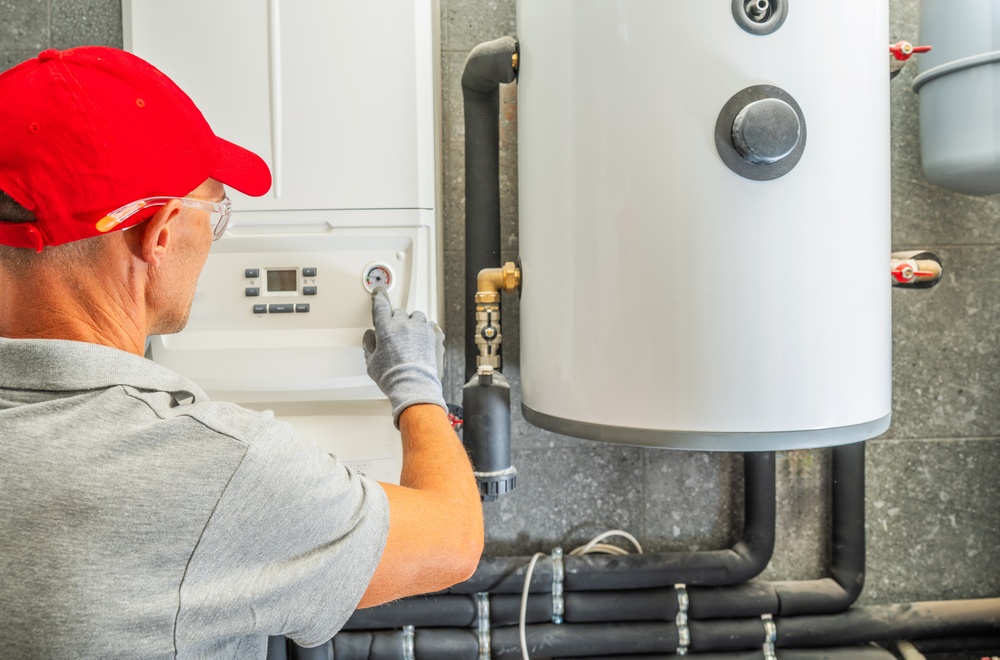
Go to the boiler and look at the display panel. A modern boiler will usually show either a fault code (a number or letter combination), a warning light, or an indicator that it has locked out.
If there is a fault code, note it down and look it up in the boiler manual. Fault codes vary by manufacturer, but they will point you toward the general area of the problem: pressure, ignition, sensor, flow rate. That will tell you whether it is something you can address yourself or whether an engineer is needed.
If the display shows nothing at all, the boiler has no power. Check that it is plugged in and switched on, then check whether a switch has tripped in the consumer unit. A boiler that has simply lost power through a tripped circuit will restart cleanly once power is restored.
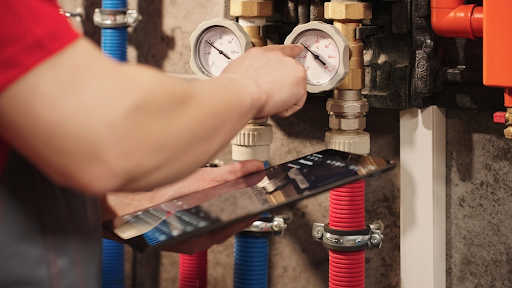
Low boiler pressure is one of the most common causes of no heating or hot water, and it is one of the few things you can safely fix yourself.
Most boilers operate correctly between 1 and 1.5 bar when cold. If the pressure gauge on the front of the boiler shows below 1 bar — or the needle has dropped into the red zone — the boiler has likely locked out due to insufficient pressure.
To restore pressure, use the filling loop. This is usually a silver or grey braided hose beneath the boiler, with one or two valves. Open the valve or valves slowly until the gauge reads around 1.2 to 1.5 bar, then close them again. Reset the boiler using the button or dial described in the manual and wait a few minutes for it to fire up.
If the pressure drops again within a day or two, there is likely a small leak somewhere in the system; in the pipework, radiators, or the boiler itself. That needs an engineer to locate and repair. Do not keep topping up and ignoring a pressure that keeps falling.

This sounds obvious, but it accounts for a surprising number of no-heating call-outs. Before assuming something has broken, confirm:
The thermostat is set above the current room temperature. If the thermostat is calling for 18°C and the room is already 19°C, the boiler will not fire.
The hot water timer has not reset. A recent power cut, a clock change, or a flat battery in a programmable thermostat can all knock the timer out of sync.
Check that the hot water schedule is set correctly for the time of day. This is particularly relevant for system boilers and heat-only boilers with a separate hot water cylinder, where the cylinder thermostat and hot water timer control independently of the heating.
If you use smart heating controls, check the app. Zone settings and schedules can occasionally override manual controls after a software update or connectivity dropout.
If this has happened during a cold snap and the boiler was working normally until recently, a frozen condensate pipe is a strong candidate.
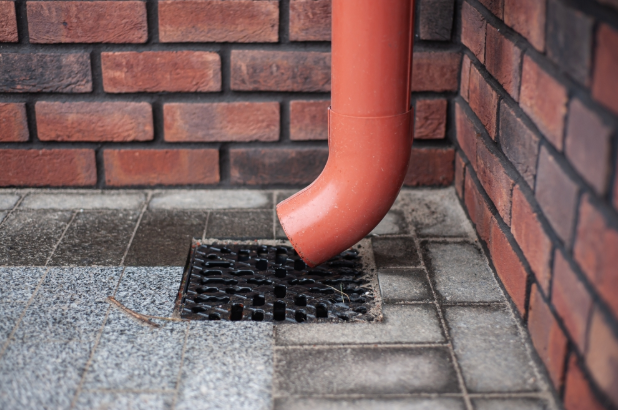
The condensate pipe carries waste water from the boiler out to an external drain or soakaway. It is usually a white or grey plastic pipe, 22mm in diameter, running from the boiler through an external wall.
In freezing temperatures, the water inside can ice over and block the pipe completely. The boiler detects the blockage, shuts down for safety, and locks out, often displaying a specific fault code.
To thaw a frozen condensate pipe, pour warm water (not boiling) over the section that runs outside, or wrap it with a hot water bottle. Once the blockage clears, reset the boiler. If the pipe is inaccessible or the fault persists, call an engineer.
After resolving a frozen condensate pipe, it is worth having the exposed section insulated to prevent it from happening again.
If the boiler display shows an ignition fault or the boiler repeatedly tries to fire and cuts out, confirm that you have a gas supply.
Check whether other gas appliances in the property (the hob, for example) are working. If nothing gas-powered is working, the issue is with the gas supply rather than the boiler. Contact your gas supplier or check whether there is a wider outage in the area.
If you can smell gas at any point, do not attempt to operate the boiler or any switches. Leave the property, leave the door open, and call the National Gas Emergency Service on 0800 111 999 immediately.
If the boiler has locked out but none of the above checks have identified an obvious cause, try a reset.
Most boilers have a reset button on the front panel, sometimes marked with an arrow or a flame symbol.
Hold it for three to five seconds and release. The boiler will attempt to restart and run through its ignition sequence. If it fires up and runs normally, the lockout may have been caused by a temporary fault: a brief pressure drop, a voltage fluctuation, or an ignition hiccup.
If the boiler locks out again within a short period, or fails to restart after two or three reset attempts, stop. Repeatedly resetting a boiler that keeps locking out does not fix the underlying fault and can occasionally mask a problem that needs proper diagnosis. At that point, the next step is an engineer.

If the heating is working fine but hot water is not coming through, the problem is not a total boiler failure but is specific to the hot water circuit. On a combi boiler, the most likely cause is a faulty diverter valve.
The diverter valve is the internal component that switches the boiler's output between heating the radiators and heating water for the taps. When you open a hot tap, the valve should redirect heat to the hot water circuit. If the valve is stuck or worn, it stays directing heat to the radiators and your taps run cold.
This is a routine fault and a relatively straightforward repair for a Gas Safe engineer. It is not something to attempt to diagnose or fix yourself, as it involves opening the boiler casing and working on internal gas components. Note the fault for the engineer and let them confirm the diagnosis.
Other causes of heating-only, no hot water on a combi boiler include:
For system boilers with a hot water cylinder, the fault is more likely to be a cylinder thermostat, a motorised valve, or a programmer issue. All of these are worth checking alongside the timer settings described above before calling out.
The reverse situation where hot water works but heating does not also points toward the diverter valve on a combi boiler, but stuck in the opposite position. It can also be caused by:
A faulty room thermostat not calling for heat, even when the temperature is below the set point. If the thermostat display is blank, try replacing the batteries.
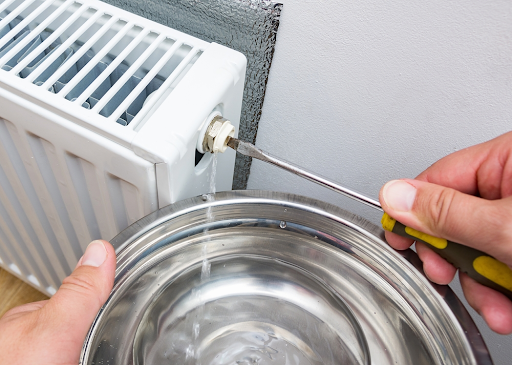
Air trapped in the radiators. If individual radiators are cold at the top but warm at the bottom, they need bleeding. This is a straightforward DIY task: use a radiator key to open the bleed valve at the top of each cold radiator until water comes out, then close it again. Check the boiler pressure afterwards and top up if needed.
A pump fault. The circulating pump moves hot water around the system. If it fails, water stops circulating, and radiators stay cold even when the boiler fires. You may hear the boiler fire up, but no heat reaches the radiators. This needs an engineer.
Total loss of both heating and hot water usually means the boiler has locked out or failed to fire. Run through the checks above in order: display and fault code, pressure, thermostat and timer settings, condensate pipe if it is cold, gas supply, reset.
If none of these resolve it, the boiler needs a professional diagnosis. Common causes at this point include a faulty PCB (the boiler's control board), a failed ignition electrode, a broken gas valve, or an internal component that has worn out. These are jobs for a Gas Safe registered engineer with the right diagnostic equipment.
Some situations require an emergency response rather than a stepwise troubleshooting process.
Call an emergency heating engineer promptly if:
For commercial properties and multi-site portfolios, loss of heating or hot water is rarely just a comfort issue. A restaurant without hot water may not be able to trade. A hotel without heating in winter faces complaints, refunds, and regulatory problems. The cost of an emergency call-out is almost always less than the cost of closure.
FS Group provides emergency heating and plumbing response across London and the South East, for both residential and commercial properties. If you have no heating or hot water and the standard checks have not resolved it, call us on 0800 689 3497 or get in touch online.
No heating or hot water is a stressful problem, but it is worth running through the basics before picking up the phone.
Low pressure, a tripped timer, a frozen condensate pipe, or a simple lockout resolve in minutes if you catch them early. The checks above are safe for any homeowner or property manager to carry out, and they eliminate the most common causes quickly.
When the checks do not resolve it, that is when a Gas Safe registered engineer is the only right answer. Gas appliances should never be opened, adjusted, or repaired by anyone who is not qualified to do so.
Heating or hot water still not right?
If the checks above have not fixed it, the fault needs an engineer. Call us and we will arrange a visit.
Boiler or heating fault in London or the South East?
FS Group repairs and services boilers and central heating across London, Essex, Kent and Hertfordshire. Call to book an engineer.


.png)
.png)





















.jpeg)


.jpeg)
.png)
.png)
.png)
.png)