Key takeaways
The short answer is this: drainage plans in the UK are not kept in one single place. You usually need to check a combination of your local water company, your local authority, and sometimes your property documents.
Let’s walk through it step by step so you don’t waste time chasing the wrong sources.
Before you go contacting external organisations, start with what you already have.
If you bought your home through a solicitor, there’s a chance drainage details were included in your conveyancing pack. This may include:
These documents won’t always give you a full drainage layout, but they often confirm whether your property connects to a public sewer and roughly where.
If you can’t find them, your solicitor may still have a copy on file.
This is the most important step.
In the UK, water and sewerage companies hold records of public sewers. If your property connects to one, they can provide maps showing public sewer locations, connection points, and sewer routes near your property.
You can request a sewer map or asset location plan directly from your provider. Some companies offer instant downloads online, while others charge a small fee.
For example:
The exact process varies, but all major providers offer this service.
According to Ofwat, water companies are responsible for maintaining public sewers and must keep records of their location and condition.
Important detail: these maps only show public sewers. Private drains within your boundary are often not included.
Local authorities can sometimes provide additional drainage information, especially for older properties or where planning permissions were involved.
You’re looking for:
If your home has had work done in the past, there’s a good chance drainage plans were submitted as part of that process.
Most councils now have online planning portals where you can search by address.
If you’re buying a property or need something more formal, a CON29DW drainage and water search is one of the most reliable documents you can get.
It provides:
This report is usually ordered by solicitors during a property purchase, but you can request one independently if needed.
The Law Society recognises CON29DW as a standard search for property transactions in England and Wales.
This is where many people get confused.
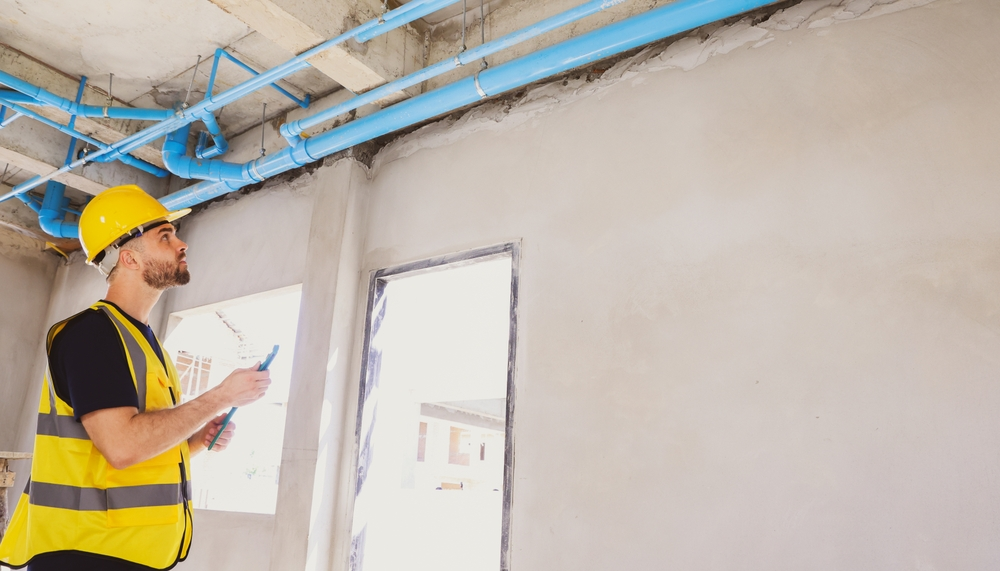
Public sewers are owned and maintained by water companies. Private drains are your responsibility and usually run within your property boundary.
Since the Private Sewers Transfer Regulations 2011, many shared drains and laterals have been adopted by water companies. But not all.
This means: you might find part of your system on a sewer map, but internal pipework and some external drains won’t be documented anywhere officially.
That’s why maps alone rarely tell the full story.
If you need precise drainage plans, especially for building work or recurring issues, this is where most homeowners end up.
A CCTV drain survey involves sending a camera through your drainage system to map pipe routes, connections, blockages or damage, depth, and direction of flow.
This gives you a real, current layout of your drainage system, not just what was recorded years ago.
In practice, this is often the fastest way to get reliable information, especially when records are missing or outdated.
It’s also something we handle regularly, particularly when clients are planning extensions or dealing with persistent drainage problems.
If your property has an extension near or over a sewer, there should be a build-over agreement in place with the water company.
This document confirms the location of the sewer, permission to build near it, and any restrictions or requirements associated with it.
If you can’t find one but suspect a sewer is nearby, it’s worth checking. Building over a public sewer without approval can cause serious issues later.
Here’s the reality. Many UK homes, especially older ones, don’t have complete or accurate drainage plans available.
Records may be incomplete, outdated or never created in the first place.
This is where people get into trouble. Guessing drain locations or relying on assumptions can lead to damaged pipes, flooding, or failed building inspections.
If you’re unsure, it’s always safer to confirm with a survey before starting any work.
The biggest mistake is assuming there’s a single “master plan” for their drainage system.
There isn’t.
Drainage information is split across different organisations, and even then, it rarely covers everything. That’s why a combination of water company maps, council records, and on-site surveys is usually needed to get a full picture.
If you’re trying to figure out how to find drainage plans for your house, the process is less about finding one document and more about piecing together the right information from the right sources.
Start with your paperwork, check with your water company, review council records, and if accuracy matters, get a proper survey done.
If you’re still dealing with unclear drainage layouts, guessing isn’t worth the risk.
Still blocked after trying this?
If the water is not moving, the blockage is beyond what DIY reaches. Our drainage engineers clear it with rods, jetting or a camera survey, at any hour.
Blocked drain in London or the South East?
FS Group clears, surveys and repairs drains across London, Essex, Kent and Hertfordshire, 24 hours a day. Call and speak to the team now.


.png)
.png)




























.jpeg)



.jpeg)


.png)
.png)
.png)
.png)