London drains back up so often because the city’s drainage infrastructure is old, overloaded, and constantly stressed by modern usage. Add heavy rainfall, aging pipes, and everyday misuse, and blockages stop being rare events. They become routine.
From Victorian terraces to modern commercial buildings, the same issues show up again and again in the field.
A large portion of London’s drainage network dates back to the Victorian era. Many of these systems were engineered for a fraction of today’s population, water usage, and surface runoff.
Back then, there were fewer appliances, fewer bathrooms, and far less paved surface area. Today, rainwater hits hard surfaces instead of soaking into soil, sending huge volumes straight into pipes that were never upsized to cope.
This mismatch between design and demand is one of the biggest reasons London drains struggle under pressure.
Much of London still relies on combined sewer systems, meaning rainwater and wastewater share the same pipes. When rainfall is heavy, those pipes fill fast.
Once capacity is reached, flow slows, pressure builds, and the weakest point pushes back. That often shows up as toilets bubbling, sinks backing up, or water rising through floor drains.
This is not a local plumbing fault. It is a system-wide limitation that becomes visible at the property level.
According to Thames Water, combined sewer systems are particularly vulnerable during intense rainfall events, which are becoming more frequent across London.
One of the most common field findings in London drain blockages is fat buildup. Cooking grease gets poured down sinks, cools inside pipes, and slowly narrows the flow path. Over time, it hardens and traps debris.
So-called flushable wipes are another major issue. Despite the marketing, many do not break down properly. They snag on joints, catch paper, and form dense blockages that plungers cannot fix.
Water UK and the Environment Agency have both highlighted wipes and fats as leading causes of sewer blockages across the UK.
In London, where pipes are already old and often narrow, the impact is amplified.
London has a lot of mature trees. That is great for the city and bad for drains.
Older clay and pitch fibre pipes are especially vulnerable to root intrusion. Tiny cracks let moisture escape, roots sense it, and before long they push inside the pipe. Once roots take hold, they trap waste and slow flow until a full blockage forms.
This is a common cause of repeated backups that seem to clear and then return weeks later.
In older properties, pipe gradients are often shallow or inconsistent. Over decades, ground movement, subsidence, or renovation work can shift pipes just enough to create low spots.
These dips allow waste to settle instead of flowing freely. Over time, debris builds up, flow reduces, and blockages become inevitable.
This is especially common in converted properties and older commercial buildings where drainage layouts have been altered multiple times.
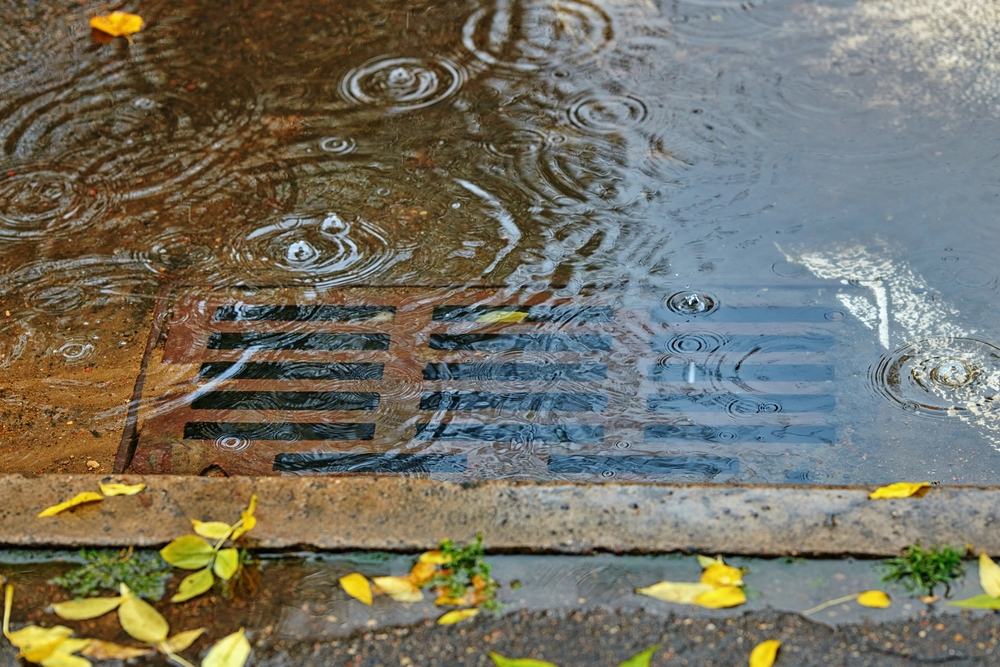
Heavy rainfall does not cause blockages, but it exposes them.
When drains are already partially restricted, extra water volume pushes the system past its limit. That is why many London drain issues show up during or just after storms.
Surface water also carries silt, leaves, and debris into gullies and drains. If maintenance is poor, those entry points clog fast and send water back toward buildings instead of away from them.
Slow drainage across multiple fixtures is rarely coincidence. Gurgling sounds when using sinks or toilets often indicate air being displaced by restricted flow. Foul smells coming from drains can signal stagnant wastewater trapped in the system.
If water appears in places it should never be, such as floor drains or low-level toilets, that is a strong sign of a deeper issue.
In London properties, these symptoms usually point to a main line or shared drainage problem, not something a bottle of cleaner can fix.
Quick fixes have their place, but long-term solutions matter more in a city like London.
Professional drain inspections using CCTV allow blockages, root intrusion, pipe damage, and structural issues to be identified accurately. High-pressure water jetting is often used to clear grease, debris, and scale safely without damaging pipes.
In cases where pipes are damaged, lining or targeted repairs can restore flow without full excavation. The key is diagnosing the real cause, not guessing.
London drains keep backing up because they are old, overworked, and constantly pushed beyond their limits. Everyday habits, combined sewer systems, root intrusion, and heavy rainfall all contribute to a problem that is far more structural than most people realize.
If backups are happening more than once, the issue is almost never the fixture. It is the system.
Ignoring early warning signs leads to emergencies, property damage, and higher repair costs. Addressing drainage issues early, with the right expertise, keeps small problems from turning into major disruptions. So, why wait? Give us a call today!