Key takeaways
When your power keeps tripping, the first instinct is usually to reset the fuse box and hope for the best. Sometimes that works. More often, it trips again within minutes, and you're back in the dark, wondering what's actually going on.
A tripping circuit breaker is not a fault in itself. It is your electrical system doing exactly what it is designed to do: cut power before something gets damaged or someone gets hurt. The problem is the underlying cause that made it trip in the first place.
This guide covers the eight most common reasons your power keeps tripping, how to tell them apart, what you can safely check yourself, and when the right call is to stop touching it and phone an electrician.
Before getting into the causes, it helps to understand what is actually happening inside the fuse box.
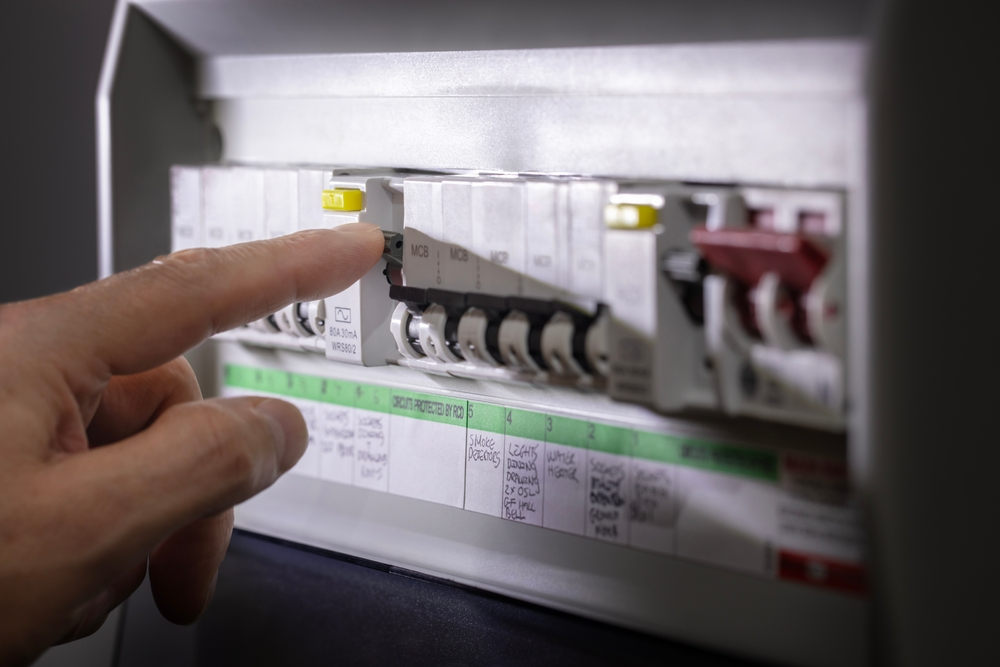
Modern UK properties have a consumer unit, which replaced the older fuse box. Inside it, you will find a main switch and a row of protective devices. These typically include MCBs (miniature circuit breakers), an RCD (residual current device), or individual RCBOs (residual current breakers with overcurrent protection) on each circuit.
Each device protects against a different type of fault:
When your power keeps tripping, the type of device that trips and how it behaves gives you the first clue about the cause.
The most common cause. An overloaded circuit happens when the total electrical load running through it exceeds what the wiring can safely handle. The MCB trips to prevent the cables from overheating.
The trip tends to happen when multiple high-draw appliances are running at the same time, most often in kitchens where a kettle, toaster, microwave, and air fryer are all on the same circuit. The breaker trips, you reset it, and it holds until you put the kettle on again.
Unplug everything on the affected circuit and reset the breaker. Then plug appliances back in one at a time. If it trips when a specific combination is running, you are overloading that circuit. Spreading appliances across different circuits, or using fewer at once, will stop the immediate problem.
If the same circuit keeps tripping despite spreading the load, the circuit may be undersized for modern demand. An electrician can add dedicated circuits for high-draw appliances. This is especially common in kitchens that have not been rewired since the 1990s.
A single appliance with an internal fault, like a failing motor, damaged element, or deteriorating insulation, can cause the RCD or MCB to trip every time it is switched on or reaches a certain point in its cycle.
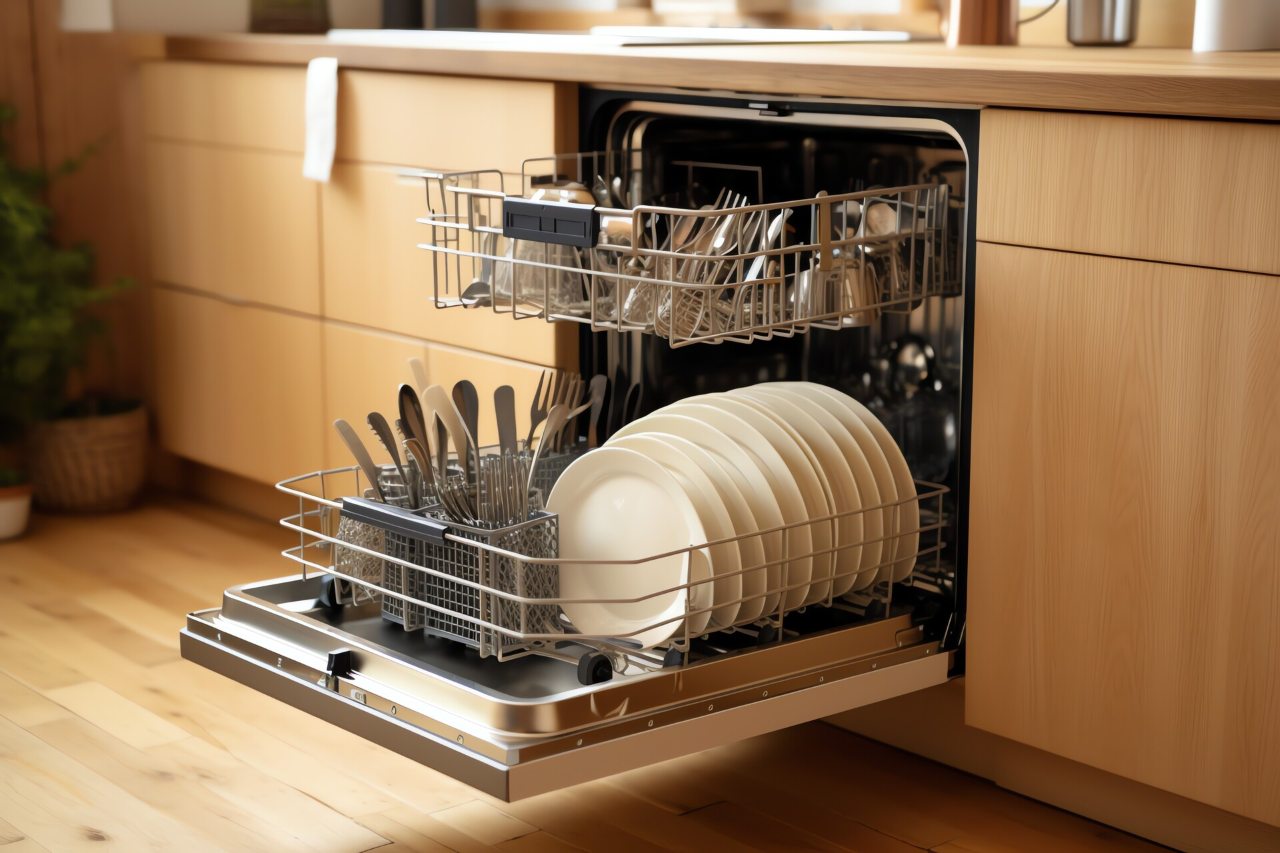
The power keeps tripping, but only when a specific appliance is in use. Washing machines and fridges are the most frequent culprits, because their motors draw a spike of current on start-up and can develop earth faults as they age. Tumble dryers, dishwashers, and electric ovens are also common offenders.
Unplug all appliances on the affected circuit and reset the breaker. Plug them back in one at a time, running each one briefly. The circuit will trip when the faulty appliance is connected and operated. Once identified, stop using the appliance until it has been repaired or replaced.
If you cannot identify which appliance is causing it, or if the breaker trips with nothing plugged in, the problem is in the wiring rather than an appliance.
A short circuit occurs when a live wire comes into direct contact with a neutral wire, bypassing the normal resistance of a circuit. The result is a sudden, massive surge of current. The MCB trips immediately to prevent overheating, fire, or worse.
Unlike an overload, which may take a few minutes to trip, a short circuit trips the breaker instantly and often hard. There may be a faint burning smell, a small flash, or visible scorch marks around a socket, plug, or appliance.
Check plugs and visible sockets for signs of burning or damage. If an appliance caused the trip, inspect its plug and cable carefully. Do not attempt to reset the breaker repeatedly if it trips instantly every time.
Short circuits in fixed wiring inside walls, in ceiling roses, or at the consumer unit itself require a qualified electrician. This is not a DIY repair. If there are scorch marks at the consumer unit, treat it as an emergency.
An earth fault happens when a live wire makes unintended contact with an earthed surface: a metal enclosure, a pipe, a damp wall, or the ground itself. The RCD detects the imbalance in current and trips the circuit.
Earth faults are often triggered by moisture. If the power keeps tripping after rain, after running a bath, or in a kitchen, garage, or outdoor circuit, an earth fault is a likely cause. The RCD trips rather than the MCB, and it may trip randomly rather than consistently.
Check for obvious sources of moisture near sockets or appliances. A damp outdoor socket, a leaking pipe close to a cable, or condensation in a bathroom light fitting can all cause intermittent earth faults. Address the moisture source and monitor whether the tripping stops.
Earth faults that do not have an obvious moisture cause or that continue after the moisture is addressed need professional investigation. A fault in buried or concealed wiring is not something to try to trace yourself.
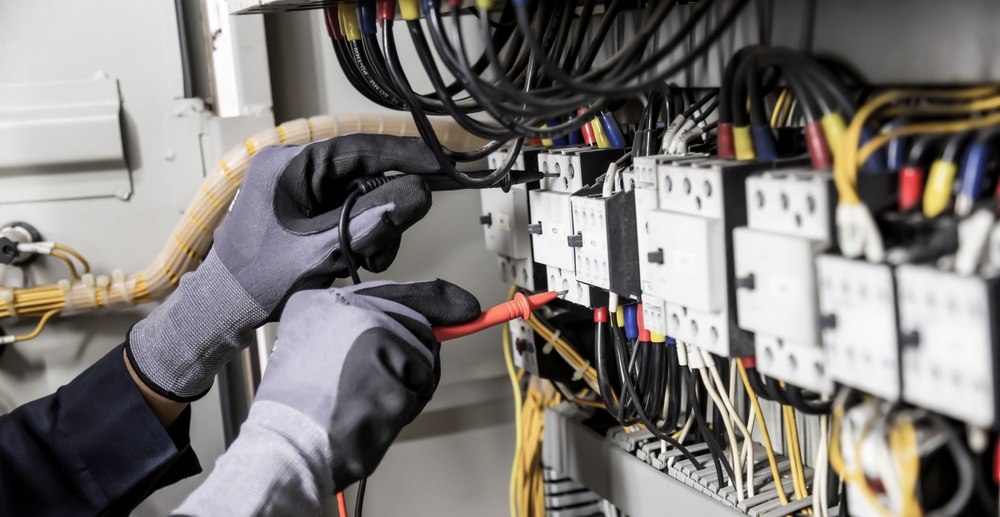
Wiring has a finite life. Older UK properties, particularly those built or last rewired before the 1990s, may have rubber-insulated or aluminium wiring that has become brittle, cracked, or degraded. Insulation failure exposes conductors, increases resistance, and creates conditions for both overloads and earth faults.
If your power keeps tripping across multiple circuits, without a clear pattern or identifiable appliance, and the property is older, wiring deterioration is a strong candidate. Other signs include sockets that feel warm, flickering lights, or a persistent burning smell with no obvious source.
There is not much to check here without specialist equipment. The practical first step is to note when and where the trips are happening and share that information with an electrician.
Immediately. Deteriorating wiring is a fire risk. The appropriate investigation is an Electrical Installation Condition Report (EICR), which a qualified electrician carries out to assess the condition of the entire installation and identify any faults, damage, or code violations.
Connections at sockets, switches, ceiling roses, or inside the consumer unit can work loose over time through vibration, thermal expansion, or poor original installation. A loose connection creates resistance, which generates heat, and can cause intermittent trips as the connection makes and breaks under load.
Loose connection trips tend to be intermittent and hard to reproduce reliably. The circuit may hold under light load but trip when demand increases. A socket that feels slightly warm to the touch, or a light that occasionally flickers before a trip, can point toward a connection issue.
Do not attempt to investigate loose connections inside the consumer unit yourself. For sockets and switches, a visual check for discolouration or signs of heat damage is reasonable. But opening them up requires confidence with electrics and, ideally, a voltage tester.
If you suspect a loose connection and cannot identify a clear cause, book a professional inspection. Loose connections at the consumer unit are particularly serious and should always be checked by a qualified electrician.
RCDs are designed to be extremely sensitive, and in some installations, they trip in response to normal operating characteristics of certain appliances rather than genuine faults. This is known as nuisance tripping.
Appliances with motors, long runs of cable, or built-in filtering circuits, such as computers, washing machines, or LED lighting systems, can cause tiny earth leakage currents that accumulate and trip the RCD over its threshold.
The RCD trips at what appears to be random intervals, not consistently tied to one appliance or a specific action. It may happen more often when multiple appliances are running, even if none of them is individually faulty. Resetting it holds for a period before it trips again.
Try to identify whether the trips correlate with any pattern like time of day, specific circuits, or specific appliances starting up. Keep a brief log. This information is genuinely useful to an electrician trying to diagnose the issue.
If the tripping is genuinely random and no fault can be identified, an electrician can measure the total earth leakage across circuits and determine whether an RCD is operating at the edge of its sensitivity. Upgrading to individual RCBOs per circuit is often the solution, since it prevents one circuit's leakage from affecting others.
Consumer units and the devices inside them do not last forever. An MCB or RCD that is mechanically worn, has been tripped many hundreds of times, or is simply old, can begin to trip at lower thresholds than it should, or fail to hold a reset even when there is no underlying fault.
If the power keeps tripping and every other cause has been investigated and ruled out, the device itself may be at fault. A breaker that trips instantly on reset, with no load on the circuit at all, is either responding to a genuine fault elsewhere or is failing internally.
Test your RCD by pressing the test button marked T on the device. It should trip when pressed and reset cleanly. If it does not trip when tested, the RCD itself may be faulty and is not providing the protection it should be.
Replacing devices inside a consumer unit, or replacing the consumer unit itself, is notifiable work under Part P of the Building Regulations. It must be carried out by a qualified electrician registered with a competent person scheme such as NICEIC or NAPIT. This is not optional.

Here is a straightforward process to work through before calling an electrician.
Step 1. Go to your consumer unit and identify which device has tripped. Is it an MCB (smaller switch), the RCD (larger device with a T button), or an RCBO? Note which circuit it protects, as the switches are usually labelled.
Step 2. Unplug everything on the affected circuit.
Step 3. Try to reset the tripped device. If it trips immediately with nothing connected, stop and call an electrician. There is a fault in the fixed wiring or the device itself.
Step 4. If it holds with nothing connected, plug your appliances back in one at a time, turning each on briefly before adding the next. If it trips when you add a specific appliance, that appliance is the likely cause. Stop using it.
Step 5. If it holds with all appliances connected but trips again later, you are dealing with a load issue, intermittent fault, or nuisance tripping. Note the pattern and contact an electrician.
Step 6. If the trip affects multiple circuits simultaneously, the RCD has tripped rather than an individual MCB. Follow steps 2 to 4 across all affected circuits.
Never repeatedly force-reset a breaker that keeps tripping. The breaker is cutting power for a reason. Overriding it repeatedly risks overheating, damage to appliances, and, in serious cases, fire.
Some situations require an emergency electrician rather than standard troubleshooting. Call immediately if:
At FS Group, our electricians cover emergency call-outs across London and the South East, including consumer unit faults, socket damage, and electrical inspections. If your power keeps tripping and you cannot identify the cause, or if any of the warning signs above apply, call us on 0800 689 3497 or get in touch online.
Your power keeps tripping because the system is working. The circuit breaker is not the problem, as it is protecting you from one. The question is what it is protecting you from, and that is where the real diagnosis starts.
Most trips have a straightforward cause: too many appliances on one circuit, a faulty kettle or washing machine, or an old installation that has reached the end of its useful life. Work through the steps above, rule out the obvious causes, and if the problem persists or anything looks or smells wrong, stop and call a qualified electrician.
Electrical faults that are left unresolved have a way of becoming expensive or dangerous very quickly. Getting it looked at properly is almost always cheaper than the alternative.
Why does my power keep tripping?
The most common causes are an overloaded circuit, a faulty appliance, a short circuit, or an earth fault detected by the RCD. Less commonly, the issue is deteriorating wiring, loose connections, or a faulty device in the consumer unit itself.
Is it safe to keep resetting a tripped circuit breaker?
Not if it keeps tripping. A breaker that trips repeatedly is responding to a genuine fault. Resetting it repeatedly without finding the cause risks overheating and, in serious cases, fire. Identify the cause before resetting more than once or twice.
What is the difference between an MCB and an RCD tripping?
An MCB trips in response to overload or short circuit on a specific circuit. An RCD trips when it detects current leaking to earth, which could indicate a faulty appliance, damaged insulation, or moisture. Identifying which device has tripped points you toward the likely cause.
Can a faulty appliance cause the whole circuit to trip?
Yes. A single appliance with an internal earth fault can cause the RCD to trip, cutting power to every circuit protected by that RCD. Unplugging appliances one by one and resetting after each is the fastest way to identify which one is responsible.
Why does my RCD keep tripping randomly with nothing plugged in?
If the RCD trips with nothing connected, the fault is likely in the fixed wiring rather than an appliance. This requires a professional inspection. Do not continue resetting.
How do I know if my consumer unit needs replacing?
Signs include persistent nuisance tripping with no identifiable cause, breakers that will not hold a reset, a consumer unit that is warm to the touch, or a unit that is more than 25 to 30 years old. An EICR will confirm whether replacement is needed.
Do I need an electrician to replace a circuit breaker in the UK?
Yes. Work inside a consumer unit is notifiable work under Part P of the Building Regulations and must be carried out by a qualified electrician registered with a competent person scheme such as NICEIC or NAPIT.
Not sure it is safe to carry on?
Electrical faults are not a DIY job. Call us and we will send an electrician to find the fault and make it safe.
Need an electrician in London or the South East?
FS Group handles electrical repairs, testing and installations across London, Essex, Kent and Hertfordshire. Call to book.




.png)
.png)































.jpeg)




.jpeg)

.png)
.png)
.png)
.png)