If you’re searching for how to unblock a drain pipe outside, you’re probably dealing with standing water, a bad smell, a gurgling drain, or sewage starting to back up. Lovely stuff. Outside drain blockages are common, but they need to be handled carefully because the wrong method can damage pipes, push the blockage deeper, or make it worse.
The good news is that some outside blockages can be cleared safely at home. The important part is knowing what to try, what to avoid, and when the blockage is no longer a DIY job.
Before lifting a drain cover or reaching for rods, check whether the blockage is likely to be in your private drain or a public/shared sewer.
In the UK, private drains are usually the homeowner’s responsibility. Public sewers are usually the water company’s responsibility. Thames Water explains that private drains are generally yours, while public sewers and shared sewers are normally maintained by the water company.
A simple rule:
If the blocked outside drain only serves your property and sits within your boundary, it is usually your responsibility.
If it serves more than one property, runs beyond your boundary, or appears connected to a shared sewer, contact your water company first.
An outside drain blockage usually starts with one or more obvious symptoms. You might notice water pooling around the drain, a strong sewage smell, slow-draining sinks and toilets inside the house, gurgling sounds from plugholes, or waste rising from an inspection chamber.
If you have more than one fixture affected inside the home, such as the toilet, shower, and kitchen sink all draining slowly, the issue may be further down the system. That’s when outside drains become the main suspect.
Wipes, cotton buds, sanitary products, fats, oils, and grease are major causes of sewer blockages. These materials stick together, build up over time, and restrict flow. On the other hand, fats, oils, and grease cool and harden in pipes, eventually causing blockages and potential flooding.
This is where many people make the problem worse.
Chemical drain cleaners may sound like the quick fix, but outside drains are often blocked by a mix of soil, leaves, wipes, grease, silt, stones, roots, or compacted waste. Chemicals rarely deal with that properly. They can also sit in the chamber, create fumes, damage seals, or splash back when you start working.
Bleach is also not a proper drain-unblocking solution. It may disinfect surfaces, but it will not remove a real outside drain blockage.
For outside drains, physical clearing is usually safer than chemical guesswork.
This part is boring, but important. Outside drains can contain sewage, bacteria, sharp debris, and chemical residue if someone has already poured something down there.
Use rubber gloves, old clothing, eye protection, and waterproof footwear. Keep children and pets away from the area.
If the drain is overflowing with sewage, stop and call a drainage engineer. That is no longer a casual Saturday morning DIY job. That is “close the lid and back away slowly” territory.
Most outside drain issues are checked through an inspection chamber or manhole cover. Use a proper lifting key if you have one. If not, you may be able to lift a small cover carefully with a sturdy flat tool, but avoid forcing it.
Do not use excessive pressure. If the cover is stuck, rusted, cracked, or surrounded by damaged paving, forcing it can cause more damage.
Once open, stand back for a moment. If the chamber is full of water or waste, the blockage is likely downstream from that chamber. If the chamber is empty but your internal drains are slow, the blockage may be upstream, closer to the house.
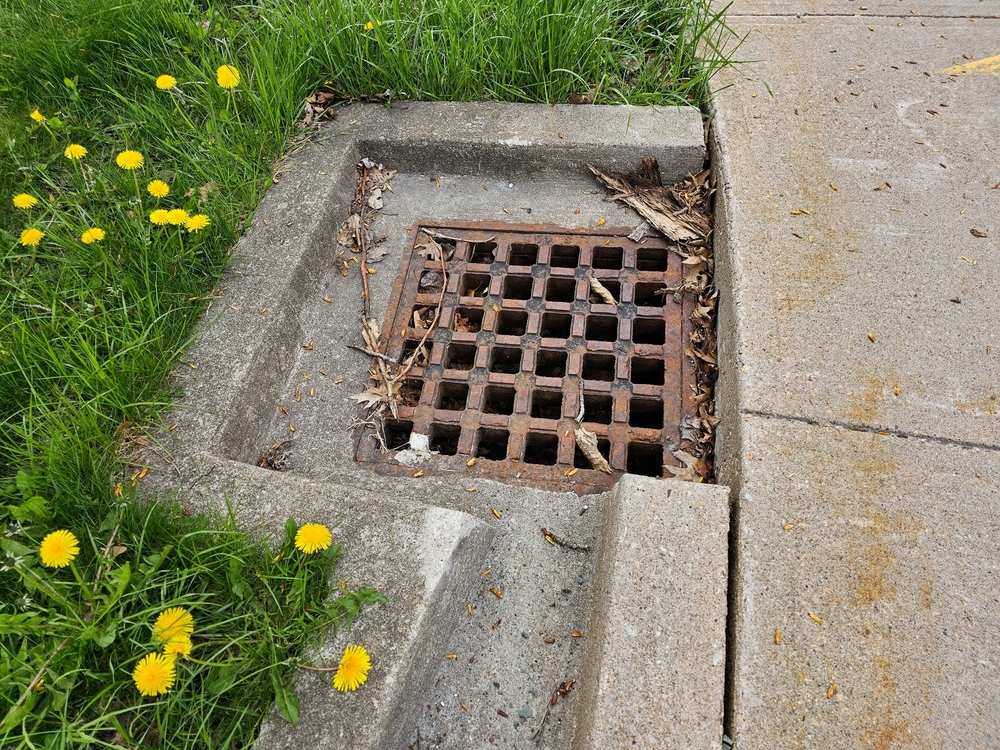
If you can see leaves, mud, twigs, stones, or surface debris near the top of the drain, remove it first.
Use a bucket, scoop, or gloved hand. Don’t push it further down. That’s how small blockages become bigger blockages with commitment issues.
Once the visible debris is removed, pour a small amount of water into the drain and watch how it behaves. If it flows away normally, you may have solved it. If it rises or sits there, the blockage is deeper.
Hot water can help with light greasy residue, but it should not be treated as a full fix. If fats, oils, and grease have built up further down the line, hot water can simply move the problem along until it cools and hardens again.
Use hot water only when the drain is not completely blocked and there is no standing sewage. Pour slowly and watch the water level. If it backs up, stop.
For kitchen-related drain issues, grease is often part of the problem. Water UK’s guidance is simple: drains and sewers are designed for human waste, wastewater, and toilet paper, not wipes, cooking fats, or sanitary products.
Drain rods can work well for outside drain blockages, but they need to be used carefully.
Attach the plunger or worm screw fitting to the rods, then feed them into the pipe in the direction of the blockage. Turn the rods clockwise as you work. This is important because most rods screw together clockwise. If you twist them the wrong way, they can unscrew inside the drain. Then you have two problems, and one of them is now hiding underground.
Push gently. Do not ram the rods hard. If you feel resistance, rotate and work slowly. The aim is to break up the blockage, not smash the pipework.
Avoid using rods if:
Once the blockage starts to move, flush the drain with water to help carry the debris away.
After rodding, flush the drain with a hose or buckets of clean water. Watch the chamber.
A clear drain should flow away steadily without rising back up. If the water clears slowly, there may still be residue along the pipe walls. If it backs up again, the blockage has not been fully removed.
At this stage, avoid repeating the same forceful rodding again and again. If it hasn’t cleared after a careful attempt, more force is not the answer.
Once the water is flowing again, rinse the drain surround and disinfect the area if sewage has escaped. Wash your tools, gloves, and footwear properly.
Do not leave contaminated water sitting on patios, driveways, or near garden areas where children or pets play.
If sewage has flooded a larger area, especially near air bricks, thresholds, or internal walls, get professional help. Drainage problems can quickly become damp and hygiene problems if wastewater reaches the wrong places.
Some outside drains need professional equipment. That does not mean you failed. It means the blockage is beyond safe DIY clearing.
Call a professional if:
This is where FS Group can help. Our drainage engineers use the right method based on the blockage, whether that means manual clearance, mechanical equipment, drain jetting, or a CCTV drain survey to see exactly what is going on.
Once the drain is clear, prevention is much easier than another emergency callout.
Keep leaves and garden debris away from gullies. Fit drain guards where suitable. Never pour fats, oils, or grease down the sink. Bin wipes, cotton buds, sanitary products, and kitchen roll instead of flushing them.
If you run a commercial kitchen, café, restaurant, care home, school, or managed property, prevention matters even more. Grease and waste build-up can cause repeated disruption, bad smells, flooding, and costly emergency callouts.
In those cases, planned drain maintenance is often cheaper than waiting for the next blockage.
The safest approach to unblock a drain pipe outside is simple: inspect first, remove visible debris, avoid harsh chemicals, use rods gently, flush the system, and stop if the blockage doesn’t clear.
If it is a light surface blockage, you may be able to clear it yourself. If it is deeper, recurring, or linked to sewage backup, it needs proper drainage equipment.
If your outside drain is blocked, overflowing, or keeps coming back after DIY attempts, don’t keep forcing it. Book a call today and get your drain flowing properly before a small blockage turns into a bigger mess.